Yuta & Noro: Spirits, Shamans and Priestesses in Okinawa
Karola had been living on Iriomote - one of the small, remote Yaeyama islands floating in the East China Sea - for five years. She was the first foreigner to live on the island (which counts venomous snakes, an endangered cat, and an almost-extinct language amongst its credentials), and remains the only one.
Iriomote is remote. It has a population of 109, and 90% of the land is covered by thick jungle and uninhabitable mangrove swamps. Its economy is mostly driven by fruit farming: pineapple, sugarcane and mango, to name just a few. There are no convenience stores, supermarkets, or high schools, and there is only one road, running across the island to connect its two ports.
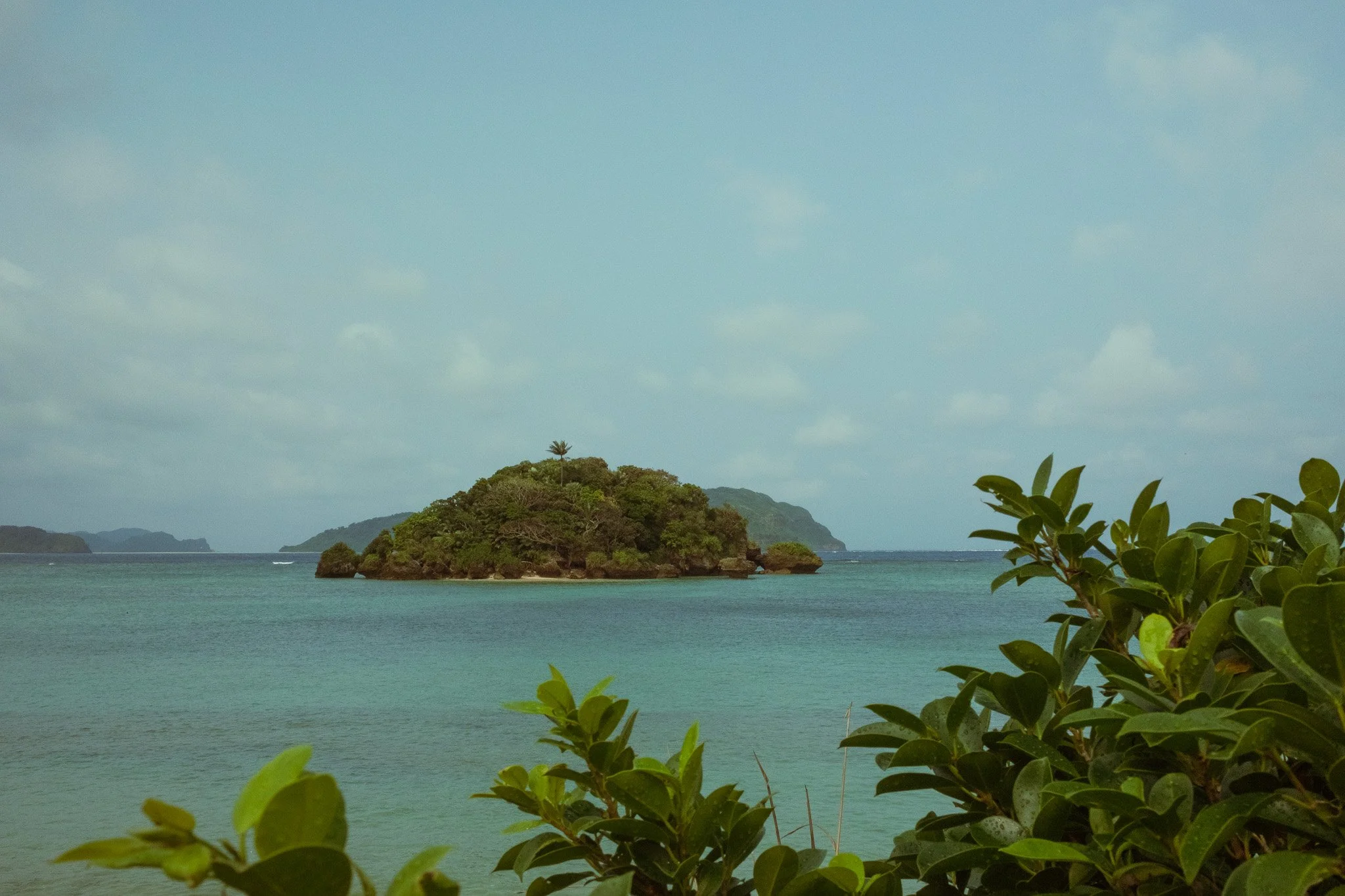
When I arrived on a mostly-empty ferry from Ishigaki Island, Karola came to pick me up from the port. Already sweating from the heat and humidity, I watched as a car with a big, artistic sprig of dried wild grass hanging from the rear-view mirror hurtled into the empty car park. The door popped open and a woman with red hair and shockingly bright blue eyes leant out to grin at me.
‘Anna?’
I gave a shaky smile back (trying not to seem like there was still a 50/50 chance of throwing up after the stormy journey in), and off we went.
I’d originally contacted Karola for a morning tour of the island, to find out about Iriomote’s spiritual and religious culture. What should have been three hours ended up stretching into six; it wasn’t just the island’s story that was fascinating, but Karola’s as well.
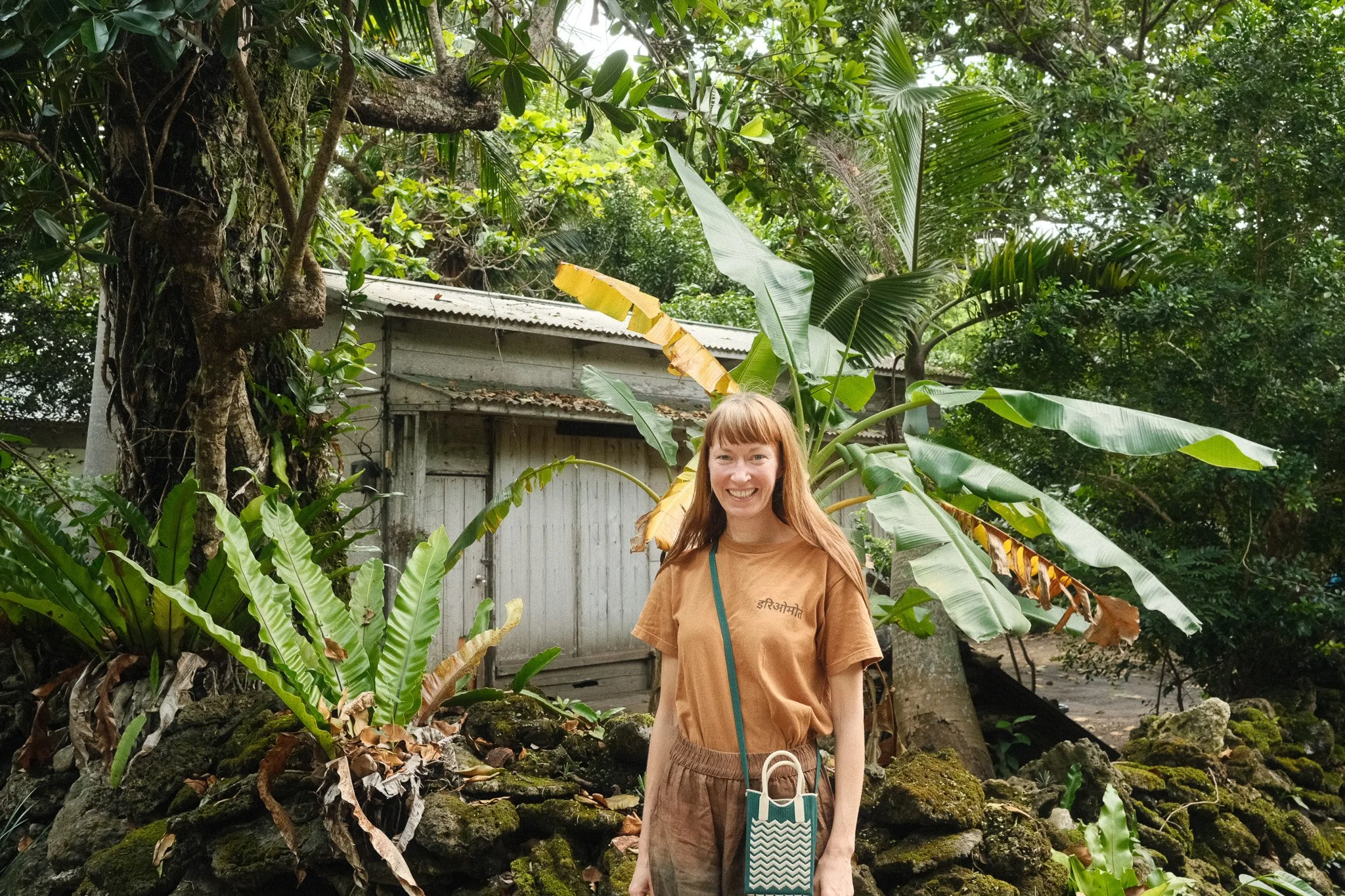
‘How on earth,’ I asked later, as we surveyed her house - old and wooden, half swallowed up by jungle and apparently occasionally invaded by snakes in the middle of the night - ‘did you end up here?’
‘I’m Polish,’ she joked. ‘You can find us everywhere.’
We walked around her yard: white silkie chickens in a pen she had made herself, fishing nets, old crumbled pots, rotting wooden planks and corrugated iron.
It turned out that she had first visited the island five years earlier for a day trip, and ended up stranded overnight due to a storm. The owner of the guesthouse was friends with the local priestess, and introduced them the next day. Karola was utterly captivated. So captivated, in fact, that she returned the following year as a seasonal fruit picker. Then she met her husband on the farm, married, and managed to wrangle the rental of an abandoned hut in the centre of one of the villages. As the first foreigner to live on the island, it had been hard work to win the acceptance of the tight-knit local community. But through her photography and interviews she was able to capture the old traditions and ceremonies on Iriomote that date back to the Ryukyu Kingdom. Now, as a side job, she offered the occasional tour around the island to people like me, explaining what she’d found.
I was mainly interested in the Yuta, the female spirit mediums unique to the Ryukyu Kingdom (the precursor to what we now know as Okinawa). Yuta are individuals who have ‘awakened’ to their psychic abilities and can enter a state of possession that allows them to communicate with deities and the spirits of the dead. People pay to consult a Yuta when suffering from illness, bad fortune, or malevolent spirits. Although the Yuta went through a period of persecution in the 17th century (there are interesting parallels to be drawn here with the Salem witch trials around the same time), there are still practising Yutas in Okinawa today. Imagine my surprise when I asked my homestay family about it and was casually informed that the grandmother had been a Yuta, and that people often came to the house to consult her.
But it’s not just the Yuta who played (and still play) a profound spiritual role in Okinawan society. Noro are official priestesses who once formed the religious hierarchy of the Ryukyu Kingdom. Unlike the Yuta, Noro do not ‘awaken’ to their position but are instead born into it, with the role passed down from mother to daughter. The main tasks of the Noro are to preside over religious ceremonies for the community and to commune with the kami-sama (god) to protect the general spiritual well-being of the people. During the Ryukyu Kingdom this was a highly respected position: Noros were paid a salary and given land by the King, whose own sister took the role of chief priestess.
When I first heard about this it made me think of Ancient Athens, which gets a lot of sh*t for supposedly being the birthplace of democracy and yet having a very slim selection of who was actually allowed to participate in that democracy (i.e. not women or slaves). Women’s role in religion, however, was a very different story. Coming at it with a 21st-century perspective, it’s easy to forget how crucial religion was to Athenian society. It was the gods, after all, who dictated success in battle, recovery from illness, childbirth, and crop growth. Women could participate freely in religion, and in fact it was only women who held responsibility for many important religious festivals and ceremonies - just like the Noro.
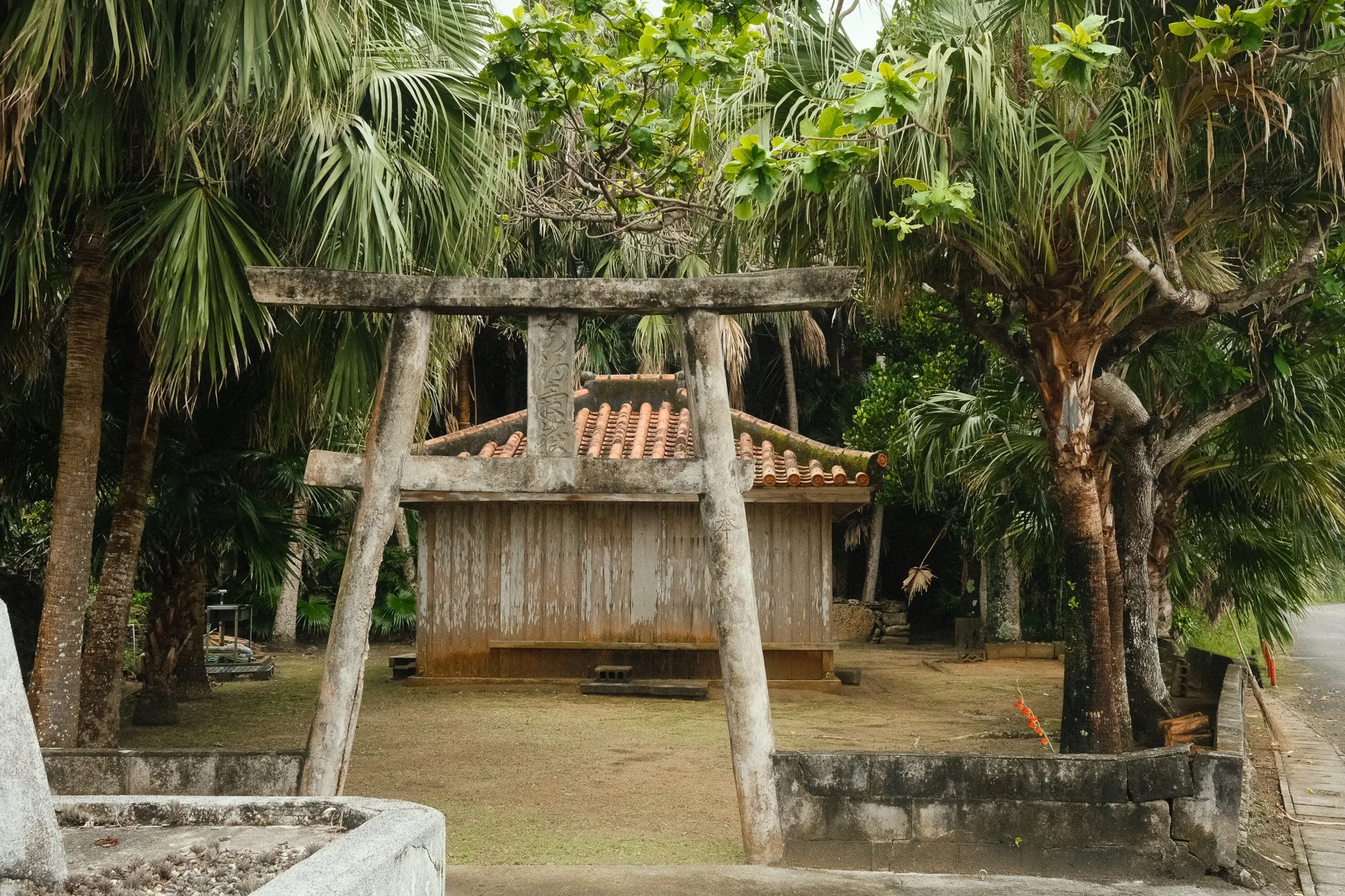
Noros belong to a specific shrine, or uganju, a sacred place of worship where ordinary people aren’t usually allowed to enter. Some people say this is because the god in the uganju is actually the ancestor of the Noro’s family, which makes it a very personal place. The uganju I visited on Iriomote was a walled-off wooden building perched on the edge of the island next to the beach. Even now, Iriomote’s Noro priestess (or tsukasa, in the local dialect) visits several times a year to pray and conduct the necessary rituals.
Karola had been lucky enough to sit in on one of these visits. As she described it, there are several altars inside the wooden shrine, all carefully facing the ibi, the embodiment of the god. The ibi itself is located outside, in the middle of a shadowy grove past a small stone wall. The priestess wears a special kimono, called a choma (yellowish white, made from ramie), and along with her helper is the only person allowed to visit the ibi. When she does, she brings incense and a round mat to kneel on while she conducts her prayers in solitude.
I, of course, had a lot of questions. Where does the tradition come from? How do they know what to do?
Karola shrugged. ‘When I’ve asked around, there are several versions. It all depends on people’s memories. When the current Noro was becoming a priestess, she learned by questioning her mother. But sometimes her mother wouldn’t know because she’d never asked herself—maybe she was too shy, or just never thought about it. So the information was lost.’
She made another good point. ‘And culturally, remember, you don’t question authority. If your sempai (senior) said it, you can’t question it.’
What is the god’s name? I asked next. Do gods even have names?
Depends on who you ask, came the answer. Some people say the gods once had names, and they’ve simply been forgotten. Others say they never did.
One of the island’s Noro now lives in Tokyo with her family and has to fly back several times a year to perform her rituals. I couldn’t help but wonder: how long will these traditions last? For an island with a population of 109, of course many young women leave to pursue education, careers, or families elsewhere. And then what? If her daughters (provided she chooses to have children) are never raised on the island - and don’t know its people or its land - how many generations will they be willing to perform a duty that grows increasingly abstract?